

Most people buy their first bong because it looked cool on the shelf. Then they find out it's a pain to clean, tips over, or cracks the first time they rinse it with hot water. And glass shops almost never take returns.
Here's what to actually check before you buy, in plain terms.
1. Glass Quality (This Matters Most)
If it's glass, it should be borosilicate, sometimes called scientific glass. It handles heat changes (cold water, hot flame) far better than cheap soft glass, and it's much tougher when it gets knocked around.
- Thickness: 5mm and up is solid for everyday use. 7 to 9mm is very sturdy but heavy. Under 4mm is fragile.
- Weight: a decent bong feels heavier than it looks.
- Clarity: good glass is clear. Bubbles, cloudiness, or uneven wall thickness are signs of cheap production.

2. Materials Beyond Glass
- Silicone: won't break and it's cheap. Many people notice a taste, and you can't see how dirty it is.
- Acrylic: cheap and light, but harsher taste and short life.
- Ceramic: can look great. Heavy, can chip, and you can't see inside.
- Metal parts (stainless steel or anodized aluminum): the strongest option for the parts that break most, like the downstem and the base. Easy to clean, too.
The best bongs often mix materials: glass for the chamber so you get a clean taste, metal and silicone where you need strength and grip.


3. Size
- Under 10 inches: easy to handle, easy to store, and smooth if the design is good. Great for most people.
- 10 to 14 inches: the classic home bong. More room for smoke, still manageable.
- Over 14 inches: big hits, but harder to clear, clean, and store, and much easier to knock over.
Bigger isn't smoother. How smooth it hits depends more on water level and design than on height. If space is tight, check out our small bongs.
4. Shape
Beakers are the most stable. Straight tubes are simple and easy to clean. Recyclers and fancy designs hit smooth but are fragile and hard to clean. Here's the full breakdown of types of bongs.
5. Percolators: Nice Extra or Headache?
A percolator adds a second round of water filtration for a smoother hit. It also adds drag, cost, one more fragile piece of glass, and a lot of cleaning. A simple bong with the right water level hits smoother than most people expect. Read more on how percolators work before you pay extra for one.
6. Joint Size and Downstem
- 14mm is the most common joint size, so bowls and accessories are easy to find.
- A removable downstem is easier to clean and replace. A fixed one means if it breaks, the bong's done.
- Glass-on-glass joints are the standard. Rubber grommets are cheaper and wear out.
7. How Easy It Is to Clean
This is the one nobody thinks about in the store and everyone thinks about a month later. Can you reach inside? Does anything come apart? Are there tiny chambers where resin will hide forever? If it's hard to clean, you won't clean it, and a dirty bong tastes bad. Browse easy clean bongs if this is your priority.
8. Stability and Durability
Wide base, thick glass, and a grippy bottom mean fewer spills. Replaceable parts mean a single accident doesn't cost you the whole bong.
9. Where You'll Use It
Staying home? You can go bigger. Want to bring it on trips, to a friend's, or out to the backyard? Look for something compact that packs up safely. Our portable water pipes are built for that.
Quick Checklist
- Borosilicate glass, 5mm or thicker
- Stable base
- 14mm joint
- Removable downstem
- Easy to reach inside and clean
- Replacement parts available
- Size that fits where you'll actually use it
Our Pick (Yes, It's Ours)

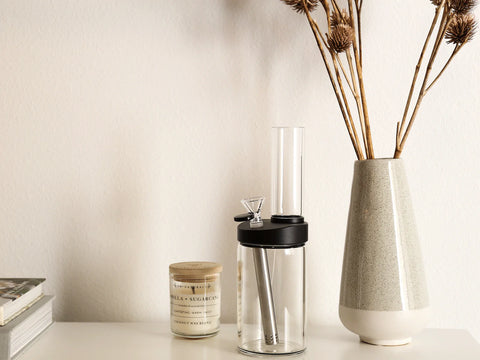
We built the Capsule Water Pipe around this exact checklist because we were tired of bongs that failed at it.
- Borosilicate glass chamber for a clean taste.
- Stainless steel downstem. The part that usually breaks, made not to.
- Anodized aluminum lid with a magnet that holds your lighter.
- Silicone base that grips the table, hides the water, and doubles as a cap for travel and cleaning.
- Comes completely apart for cleaning, and packs into itself to travel.
- Every part is replaceable. Break one, replace one.
Gear Patrol has named it Best Bong four years running: 2023, 2024, 2025, and 2026. If it's not the right fit for you, the checklist above will still steer you to a good one.

FAQ
How much should a good bong cost?
For quality borosilicate glass that'll last, expect to pay somewhere around $60 to $200. Under $40 usually means thin glass. Past $300 you're paying for art, which is great if that's what you want.
What size bong is best for beginners?
Something under 10 inches with no percs. Easy to handle, easy to clear, easy to clean.
Where should I buy a bong?
Anywhere with clear info on glass thickness and materials, and replacement parts you can actually buy later. You'll need to be old enough, too. Here's how old you have to be to buy a bong.